"He said, "Don't you feel lonely living in your own little world? She whispered, "Don't you feel powerless living in other people's worlds?" Virginia Woolf. In this blog, you will find theoretical information about Children's Literature. In addition, different concepts will be discussed in order to know the impact that these notions have in a Literature Class.

About Me

My photo
I'm a ´pre-service teacher who is currently coursing Spanish and English degree in Universidad Pedagogica Nacional in Bogotá, Colombia. I would like to share educational experiences regarding not only education environments but also methodologies that can make me improve my own identity and performance as a teacher.

Followers

Search This Blog

BTemplates.com

Powered by Blogger.

Literature as the main element

Literature as the main element This proposal was made with the purpose of teaching English taking literature as the main element.  In con...

Monday, January 14, 2019

Literature as the main element


Literature as the main element

This proposal was made with the purpose of teaching English taking literature as the main element.  In consequence, the picture book calls "The best thing ever" (2016) will be the element used to teach English and fulfill students’ needs concerning English knowledge. 

In an article published by     Education and Culture DG (2010) Task-Based Learning methodology is defined as a different way to teach languages that places real-world situations in the context of the EFL classroom. In this methodology, communication is essential for doing the proposed tasks in order to change students’ perspectives towards the English language. Therefore, by using TBL methodology, students will be able to understand the language as a tool to achieve a goal, conceiving the use of target language as a necessity. 

Furthermore, it is relevant to clarify that TBL is based on a cycle that might help students to understand and actively participate in the task. The first stage in this cycle is the pre-task; here, consciousness towards the topic and the task is raised, moreover, an introduction to the subject is presented, this introduction can be made through pictures, posters, demonstrations, etc. Subsequently, in the Task-cycle, students work with and use  EFL, activities like pair work, and group work is useful in this step. Finally, in the post-task, a reflection towards common phrases and words used in the lesson is made; the language is practiced, and students build their knowledge in regard to the language. 

Apart from the above-mentioned methodology, it is necessary to clarify that this project is based on Applied Linguistics. Brumfit (as cited in Davies, 2007), defines Applied Linguistics as a theoretical and empirical investigation of the real world, in which the central issue is the language. Therefore, the most important aspect of this proposal is the fact that it takes into consideration real-life problems, relating the language to students’ communicative needs.

Instruments

•    Field notes. According to Jimenez et al. (1993), field notes are useful tools to write down what researchers observe, listen, and perceive. In this project, observations were made during the three sessions, and data regarding students’ preferences, strengths, and weaknesses in the English language was collected. 
•    Surveys. This instrument is used at the beginning of the implementation process in order to gather general information about students’ likes and preferences in regard to the English class. As Jimenez et al. (1993) affirm, this instrument is designed to find out which are students’ perceptions and thoughts towards a specific phenomenon. 
•    Interviews. As McNamara (1999) states, interviews are useful to gather in-depth information about the phenomenon. The interview for this research was applied at the end of the implementation process, in order to determine students’ responses towards the different classes, activities, and the reading.
•    Artifacts. As students will work on artistic tasks, artifacts are useful instruments to collect students’ creations during the implementation cycle. Craig (2009) points out that artifacts are items that participants create and that provide meaningful information to the research.


Proposal


Aiming to bring students closer to the literature world, and to determine the impact of using picture books in the improvement of the English abilities, this proposal implements Task-based learning as the pedagogical approach. As it was mentioned previously, TBL is a process that requires a pre-task, a task-cycle, and a post-task. Bearing in mind these aspects, the proposal is divided into three stages that will carry out during three sessions of 2 hours each.


In the first stage of the implementation, the major objective will be to create a pre-task in which students could have the opportunity to identify some relevant aspects of the picture book that was read “The Best Thing Ever”. In addition, in this pre-task section, students will have the opportunity to work with art activities. Therefore, it is crucial to mention that, in order to develop the implementation of the proposal, students’ preferences in regard to artistic tasks need to be considered. This stage was highly useful for the subsequent reading, as the picture book contained vocabulary that might be difficult to understand by the students.


Within the pre-task, some relevant information regarding the content of the picture book will also be introduced. The best thing Ever is a picture book written by Mellissa Fagan and illustrated by Lauren Nel. The creators of this picture book have been in constant contact with the African culture. Thus, in several of their stories, the African culture is portrayed. In “The Best Thing Ever”, Muzi is an African boy that loves to build things with his toys. However, he must leave his toys at home and discovers that outside there are countless toys and objects to build the best thing ever; a beautiful new house for his grandmother. This picture book was not only selected because of its cultural content but also because children could feel identified with the main character of the story. 


In order to introduce some aspects of African culture, some pictures will be shown in the class. The main objective of this stage was to overcome those stereotypical perspectives about African culture. Then, the first group of images will contain pictures of tribes, animals, deserts, and poverty. These pictures were chosen because they are usually related to the African culture. The idea is to show the images with no context and students should guess where the images are from. After observing the first images, teachers will show some other pictures that belong to Africa, but that is not usually identified as part of this context: pictures as buildings, trains, schools, and restaurants will be displayed. By doing this contrast, teachers will encourage students to think about Africa not just as a rural society surrounded by poverty, but as a community similar to theirs.


After accomplishing the previous stages, teachers will proceed to read the book. Throughout the reading, the teacher will develop a set of questions in order to engage the students with the book (e.g. What can you see? Do you know what this is? What will happen next? etc.). Additionally, as the picture book presents several adjectives in the story, teachers will implement realia to felicitate the reading comprehension process. Added to this, it is important to clarify that the book should be presented printed in order to allow students to have contact with the physical book. 


Once the teacher finishes the reading, he or she will ask various questions to determine either student had understood or not. The questions will be related to the book’s story; e.g. What was the best thing ever for Muzi? Who was uGogo? ¿what objects did Muzi used to build the best thing ever? What kind of objects can you find on the streets? etc. Then, students must create a manual activity that represented the best thing ever for each one of them, using materials that the teachers provided. This stage was the task-cycle, where students will take into consideration the picture book and the different objects given by the teacher to create their art pieces 


Finally, in the post-task, some of the students shared their art creations to their classmates, explaining why they had decided to create that specific object and why it was important for them. During this process, teachers encouraged and support students to make use of the English language and new vocabulary they had acquired. 


Bibliography
  •      Education and Culture DG (2010) Task-Based Learning. Lifelong Learning Programme;   Pools-m. Retrieved from: https://www.languages.dk/archive/pools-m/manuals/final/taskuk.pdf
  •      Davies, A. (2007) History and definitions: An Introduction to Applied Linguistics. From Practice to Theory. Edinburgh University Press.    

  •                  Fagan M, Origgi S, Nel L (2016) The Best Thing Ever. with the help of the Book Dash participants in Cape Town  https://freekidsbooks.org/wp-content/uploads/2016/12/The-Best-Thing-Ever.pdf
  •                 Jiménez, E., Rodríguez, G. & Gil, J. (1996) Metodología de la Investigación Cualitativa. España: Editorial Aljibe.

  •     Kiefer, B. Tyson, C (2009) Charlotte Huck's Children's Literature: A Brief Guide. Children ’s literature and Picture Books.  McGraw-Hill Higher Education.

  •     McNamara, C. (1999). General Guidelines for Conducting Interviews, Authenticity Consulting, LLC, Retrieved from http://www.managementhelp.org/evaluatn/intrview.htm

Monday, November 26, 2018

UPN'S PLIGHT


Given the recent strike, which has taken place in Colombia cities, due to a lack of resources for  Colombian's public universities I would like to refer to a different topic. Therefore, in this post, I'm going to comment about the current situation in Universidad Pedagogica Nacional located in Bogotá, Colombia. I hope you find this topic interesting.


UPN’S PLIGHT
Imagen relacionadaColombian public universities are very sensitive to the plight of economic resources, especially those which should be delivered to public affairs. For that reason, the Universidad Pedagógica Nacional is interested in how the government is delivering the economic resources that are intended for public education. Due to the public universities’ plight, there are groups of students who demonstrate a radical stand regarding the diverse problems that affect the academic schedule. However, there are some others who disagree with these stands, expressing a passive behavior against UPN’s plight.
Imagen relacionadaInside of the UPN, there are two sides of the same coin. In one hand, there are some people who think that taking a radical stand; such as: blocking the buildings or forcing the people to assist to one of the multiple meetings that they convoked, representing the spirit of the public university against the plights that affect their Alma matter. Furthermore, these actions do not consider the stand of the majority of people who forms part of the university community; consequently, these activities not only affect the academic schedule but also, reduce the number of people who should support a resolution for UPN’s ´plight.
Imagen relacionadaOn the other hand, there is a bunch of people who do not assist to the university due to the stand of some individuals who decided to block the buildings; causing that teachers and students do not get into the buildings. Thus, most of them do not assist because they consider that these stands are just an excuse to avoid academic classes, which clearly reduce the assistance of the university community. UPN’s plight does not seem important to them because their goal is to keep the academic schedule without any obstruction on it.

As a conclusion, it is evident that UPN and some others public universities are experiencing a difficult financial situation. Besides, it is remarkable that students and teachers continue to manifest a disunity between each other. Therefore, the university community does not take a stand regarding the UPN’s plight even when both teachers and students are being affected by this standstill and government decisions.

Monday, November 12, 2018

Literature in Children's life


In this post, will point out the importance of literature in children's life. Hope you find it interesting. 

Literature in Children's life

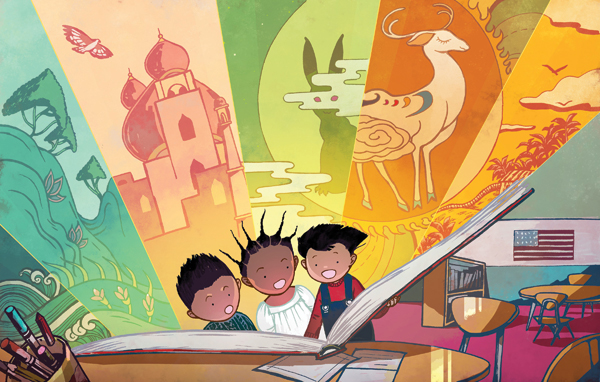
The experience that humankind has got through literature has been important for its own heritage. Literature has been considered as an extension to reconstruct an experience in children population. Nowadays, children are more able to spend more time.
Resultado de imagen para children's literature
However, their time is not focusing on something that allows them to create a significant experience in their lives. Therefore, the approach that literature should have is base on the enjoyment of reading, that means if the children get close the literature this would capture their attention. It is important to consider that children’s interests should get it through the connection between literature and aspects that the child individually enjoyed.

For instance, narrative activities allow the children to construct a reality through the stories that the teacher provides. Consequently, this close relation between literature and children let the children create an important aspect, their imagination. 

Resultado de imagen para children's literatureThen, reading literature not only increase their skills in terms of academic aspects but also allows the children to create their own criteria about life and what is around it. The assessment could be a problem regarding the evaluating children perform. However, this should be focus on the skills that children develop providing feedbacks that allow them the create a critical stand about literature. Teachers, fathers, and school should involve in this process.


Kiefer, B. Tyson, C (2009) Charlotte Huck's Children's Literature: A Brief Guide. Children’s Literature.  McGraw-Hill Higher Education.

Monday, October 29, 2018

Child Writer


In this new post, you will a review which focuses on writing development skills. Hope you might find it interesting.

CHILD WRITER

 According to Emilia Ferreiro (1988), students who are acquiring writing development skills go through a constructive process that will allow them to appropriate this skill and subsequently master it.
Imagen relacionada
The author mentions the duality that exists between the conceptualization of the oral and the written process. Therefore, Ferreiro (1988) describes two conditions within the varieties that can exist at the moment in which the child tries to transcribe a word from orality to writing: the first is the quantitative condition which refers to the number of spellings arranged by the learner to represent a word. And the second condition is the qualitative one which exposes the use of certain letters, their position and their combination that exists between them to form the mentioned word.
 

Then, Ferreiro declares that learner must be critical in order to select the words that he or she is about to produce so that he/she finds the meaning to it. Consequently, the author claims that writing is an act where the human being accepts the assignment of finding meaning and coherence to what is reflected in his writing. Therefore, we must bear in mind that writing must not only be an act in which the human being decodes graphic signs but also goes further, accepting the responsibility of searching for a sense of the text, transforming previous knowledge by recently learned knowledge.
Imagen relacionada
Besides, Ferreiro (1988) manifests two important domain fields: interpretation of writing from phonological education and later a semantic education of the graphic word. Each field of dominion falls one on the other, reconstructing the knowledge previously acquired in such a way that it lends itself to a transformation of knowledge.


Ferreiro, E. (1988) “L’écriture avant la lettre.” En H. Sinclair (comp.) La production de notations chez le jeune enfant. Paris, Presses Universitaires de France.
    Ferreiro, E. (1988). “Introduction” as Guest Editor of Early Literacy, special issue

Monday, October 15, 2018

Children Literature Program


Promoting reading in classes will develop literary appreciation and awareness. However, children need to experience the literature on their own instead of starting by analyzing the formal aspects of it. Furthermore, teachers are responsible for diffusing that enjoyment and pleasure that literature is able to provide, and they also must create innovative strategies to promote reading in their students. 

Imagen relacionada


Instead of working on worksheets, children can develop various ways to enhance reading comprehension. Teachers should read aloud to kids and reread favorite stories to help them build that enjoyment that is pursued but always considering children’s needs. 


Providing real books in the classroom is a relevant aspect to create enthusiastic readers, students should be able to access the books of their interest when they need them, this environment is crucial if teachers want to create a life habit in their children.  

Resultado de imagen para literature annoying children

Connecting books in the curriculum are fundamental if the aim of the school is to promote reading as a lifetime activity. However, the problem comes when teachers try to evaluate the progress of students. However, literature should not be evaluated based on tests; evaluation should be based on the observation of each student’s process, and the abilities they demonstrate in the activities the teacher prepares for the class.


Kiefer, B. Tyson, C (2009) Charlotte Huck's Children's Literature: A Brief Guide. Planning the literature program.  McGraw-Hill Higher Education.

Monday, October 1, 2018

Literary Education


This post takes as its point of departure the problems which Students of English Literature (or Spanish Literature in some cases) face when confronted directly with the reading of literary texts.


Certainly, diverse resources have been implemented nowadays in Literature classrooms in order to engage the student with literary texts, such as visual arts or audiovisual supplies.


Nonetheless,  this, when combined the difficulties posed by a very partial knowledge of the foreign language (and all the linguistic and cultural implications) still might represent a problem of understanding a literary text.  Besides, evaluation criteria implemented by some teachers focus on a literal understanding rather than an inferential reading that allows the students to be more reflective concerning the text.


Hence, teachers should be more contemplative regarding the evaluation criteria that are used to evaluate literary texts, creating more circles of dialog in which students' attention do not focus on an individual perspective, but, discussing among their partners their stands, allowing them to establish a cooperative way of learning.


In the next post, I will discuss the "literary competence" when is considered in terms of intellectual performance.


References
Colomer, Teresa (1996). El aprendizaje de la competencia literaria. Universitat Automa de Barcelona. Barcelona, España.

Monday, September 17, 2018

Children’s literature


In this first post, I am going to introduce you Children's Literature. Very briefly, I will describe the main elements that make up this interesting topic. 

Children’s literature.
According to Kiefer and Tyson (2009), literature is “the imaginative shaping of life and thought into the form and structures of language” (p. 3). Hence, literature should be offered to the child as a way of enjoyment and fun. Children naturally enjoy reading and listening to stories that challenge their imagination. For this reason, parents and teachers should feed that curiosity and let them discover the world of literature. In addition, sharing literature with children provide personal and educational values that are crucial in the development of children. Among the personal values, the authors mention:


    Imagen relacionada
  •  Imagination: literature allows children to discover new perspectives of facts and to create new possibilities. 
  • Insight into human behavior: Children can be conscious of their own lives and other’s lives and problems through literature.


    Additionally, literature can also help in the development of educational values as the following:

     
  • Learning to read: studies has shown that reading aloud to young children makes easier the process of reading. 
  • Book language: through literature, children develop and extend their vocabulary. 
  • Literature and writing: the relationship between reading and writing seems to be clear, children are influenced by the previous stories they have read or heard. 
  • Critical thinking: literature allows children to make judgments and to be more creative, they usually decide the main idea and theme of the stories.

    It is important to mention that literature is not just a way of learning, it also provides enjoyment, fun, mental and personal development. Then, this project attempts to bring students closer to the literature world, realizing the impact that reading may have on children’s lives.
Imagen relacionada
References:

  • Kiefer, B. Tyson, C (2009) Charlotte Huck's Children's Literature: A Brief Guide. Children’s literature and Picture Books. McGraw-Hill Higher Education.